C 언어에서 코맨드라인 인수를 사용하는 예제이다.
#include <stdio.h>

int main(int argc, char *argv[]) {

    while( --argc > 0 ) {

           printf("%s\n", argv[argc]);

    }

    return 0;
}
실행결과는 아래와 같다. 코맨드라인 인수가 역순으로 출력된다.

#include <stdio.h>

int main(int argc, char *argv[]) {

    while( --argc > 0 ) {

           printf("%s\n", *++argv);

    }

    return 0;
}
새로운 실행결과는 아래와 같다. 코맨드라인 인수가 정순으로 출력된다.

코맨드라인 인수를 한 줄로 나열하여 글대로 출력하는 프로그램을 만들어 보자.
#include <stdio.h>

int main(int argc, char *argv[]) {

    int c;

    while( --argc > 0 ) {

           argv++;
           while( c = *argv[0]++ ) {
                   putchar( c );
           }
           putchar( ' ' ); // print space char
    }

    return 0;
}
실행결과는 아래와 같다. 코맨드라인 인수가 한 줄로 연이어서 출력됨을 알수 있다.
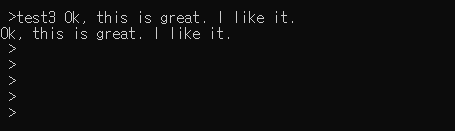
마지막으로, 코맨드라인 인수를 문자열에 집어넣어서 출력하는 프로그램을 만들어 보자.
#include <stdio.h>
#include <stdlib.h>

#define MAX_STR 512

int main(int argc, char *argv[]) {

    int c, i;
    char buf[ MAX_STR  ];

    i = 0;
    while( --argc > 0 ) {

           argv++;
           while( c = *argv[0]++ ) {
                   if( i++ < MAX_STR - 1) buf[i-1] = c;
                   else { puts("Memory not enough1"); exit(1); }
           }
           if( i++ < MAX_STR -1 ) buf[i-1] = ' '; // add space char
           else { puts("Memory not enough2"); exit(1); }
    }
    if( --i < MAX_STR ) buf[i] = 0x00; // remove last space and finish string
    else { puts("Memory not enough3"); exit(1); }

    printf("[%s]\n", buf);

    return 0;
}
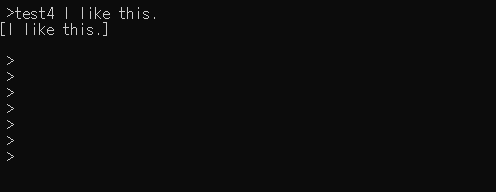
실행결과는 아래와 같다.
'C 언어' 카테고리의 다른 글
| C 언어로 간단한 게임 만들기 (0) | 2021.08.16 |
|---|---|
| C 언어로 숫자 야구 게임 만들기 (0) | 2021.07.15 |
| C언어 구조체의 동적배열 사용하기 (2) (0) | 2021.02.16 |
| C언어 구조체의 동적배열 사용하기 (0) | 2021.02.08 |
| C 언어 동적 배열 (2차원 문자 배열) (0) | 2021.02.07 |


댓글